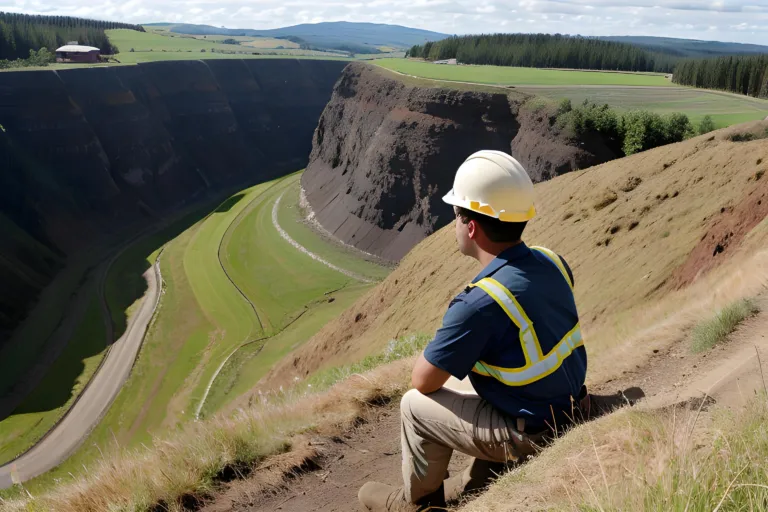
In an era defined by rapid urbanization and increasing demand for infrastructure, the construction aggregate industry plays a pivotal role. However, as the need for raw materials grows, so does the importance of environmentally conscious quarrying. Implementing green practices in greenfield site selection not only benefits the environment but can also pave the way for operational efficiencies and an enhanced brand image. Let’s dive into the myriad of ways eco-friendly[…]

Mining News
Greenfield Site Selection
Geological Considerations for Greenfield Site Selection in Aggregate Production
The quest for the ideal location for construction aggregate production goes beyond a simple glance at the surface. Geological considerations form the bedrock (pun intended) of any decision to establish a greenfield site for aggregate production. While the presence of the desired resource is a crucial factor, numerous other geological considerations play an equally vital role. Here’s a comprehensive look at both the obvious and the subtle geological factors you[…]
Avoiding Pitfalls: Common Mistakes in Selecting a Greenfield Site for Aggregates
Selecting the ideal greenfield site for a new aggregate operation is crucial for the long-term success and profitability of the venture. However, many investors and mining companies frequently stumble upon various pitfalls, some of which could be avoided with a well-thought-out strategy and thorough research. Let’s dive into some of the most common mistakes and how you can avoid them. 1. Underestimating Overburden One of the primary challenges in setting[…]
From Coast to Coast: Navigating Construction Aggregate Permitting in Every U.S. State
Embarking on a mining project demands a meticulous understanding of the permitting landscape. Each state in the U.S. has a designated primary agency overseeing the mining sector, ensuring that operations align with established environmental and safety standards. This guide presents a concise list of these central agencies for each state, accompanied by direct links to their websites for easy access. However, it’s crucial to bear in mind that while these[…]
How to Determine Basic Regional Construction Aggregate Pricing
Navigating the complexities of the construction aggregate market can be daunting. One of the foundational elements to comprehend in this vast market is regional pricing. By grasping regional pricing trends, industry players can make more informed investment and operational decisions. This article provides a guide to determining basic regional construction aggregate pricing. 1. Understand the Basics of Aggregate Pricing The price of construction aggregates isn’t just based on the material[…]
Land Requirements for Greenfield Aggregate Sites: Finding the Perfect Fit
When seeking to start a new aggregate operation, one of the first questions a potential operator will ask is, “How much land do I need?” It’s an essential query that determines the scale, longevity, and feasibility of the project. While the specifics of land requirements can vary based on numerous factors, understanding some benchmarks is a good starting point. Different Aggregate, Different Needs The type of aggregate you’re planning to[…]
Unearthing Profits: The Inside Scoop on Managing Overburden
For those in the aggregate industry, the term “overburden” refers to the naturally occurring material that lies above the area of interest. While the valuable aggregates are the primary focus of any mining operation, overburden management is a critical aspect that often demands a significant portion of an operation’s budget and attention. According to a study by the U.S. Bureau of Mines, the average cost of overburden removal in the[…]
Infrastructure and Accessibility: The Role They Play in Greenfield Site Selection for Construction Aggregate Sites
When plotting a course to set up a new construction aggregate operation, there’s more to the equation than just the availability of resources. An often overlooked yet pivotal element in this decision-making process is the role of infrastructure and accessibility. Let’s dive into the compelling impact transportation costs and logistics can have on the viability of a greenfield site. The Rising Tide of Aggregate Transportation Costs A glance at recent[…]
Understanding Aggregate Market Supply and Demand
The construction aggregate industry is foundational to infrastructure and real estate development. For producers, investors, or stakeholders, grasping supply and demand dynamics is paramount. Here’s a detailed yet straightforward guide on calculating aggregate market supply and demand. Introduction to Aggregate Supply and Demand At its essence, the concept of supply and demand forms the foundation of economics. They are two fundamental forces that interact to determine the price and quantity[…]
Mapping Potential: A Guide to Evaluating Usable Acreage for Greenfield Aggregate Sites
Whether you’re an established aggregate producer looking to expand, or an entrepreneur venturing into the industry, discovering and evaluating greenfield sites for their usable acreage is a critical step in growing your aggregate business. Greenfield sites—those lands untouched by previous mining—are potential goldmines. But unlocking their potential calls for a systematic and strategic approach. Let’s explore the step-by-step process of how to determine the usable acreage of a greenfield site[…]
Mapped: Crushed Stone, Sand, and Gravel Production
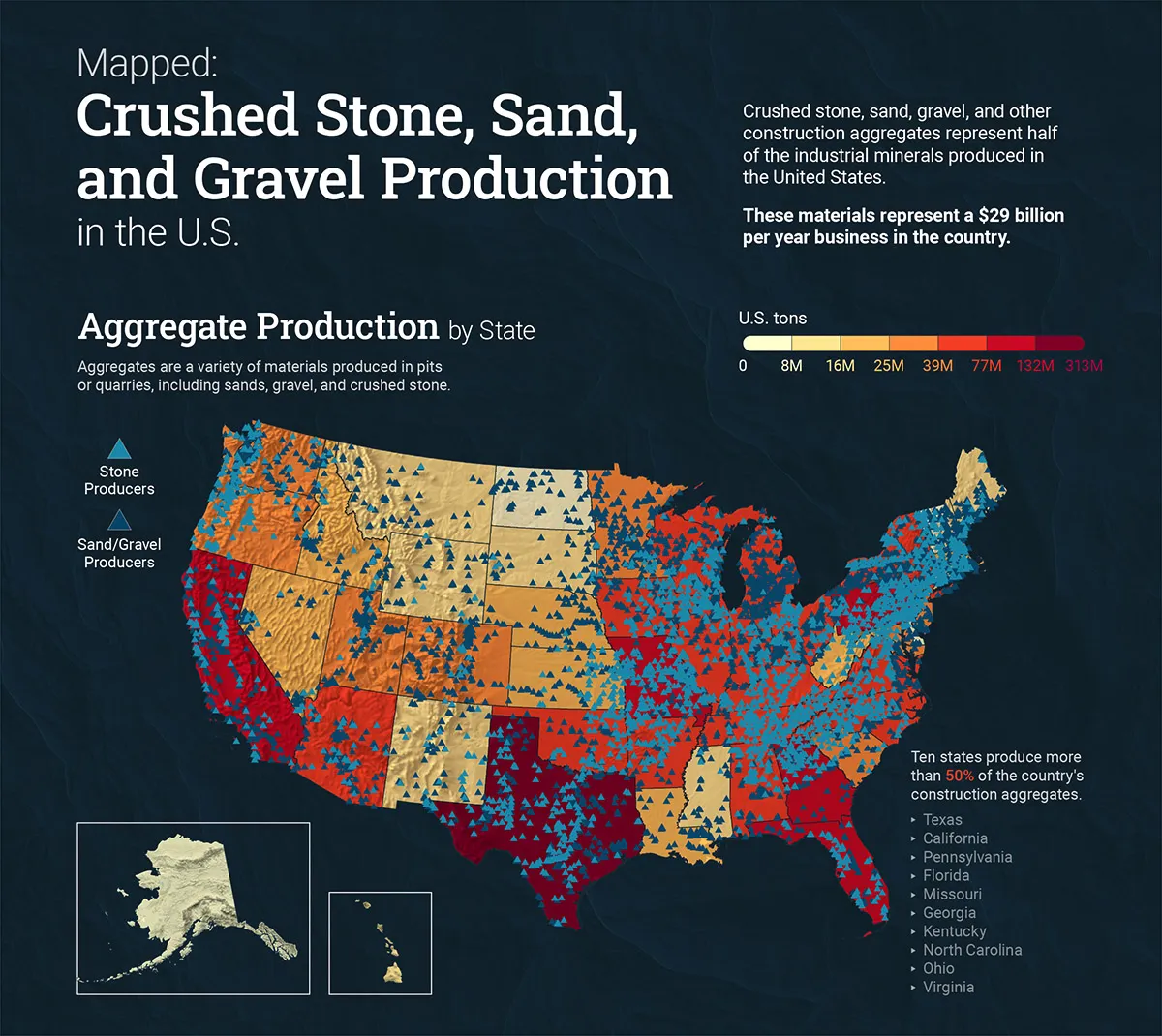
Crushed stone, sand, gravel, and other construction aggregates account for half of the industrial minerals produced in the United States. These materials represent a $29 billion per year business in the country. The map above from our sponsor Burgex uses data from Mineralocity to show where aggregates are produced in America. What Are Aggregate Minerals? Aggregates are a variety of materials produced in pits or quarries, including sands, gravel, and crushed stone. They are[…]